
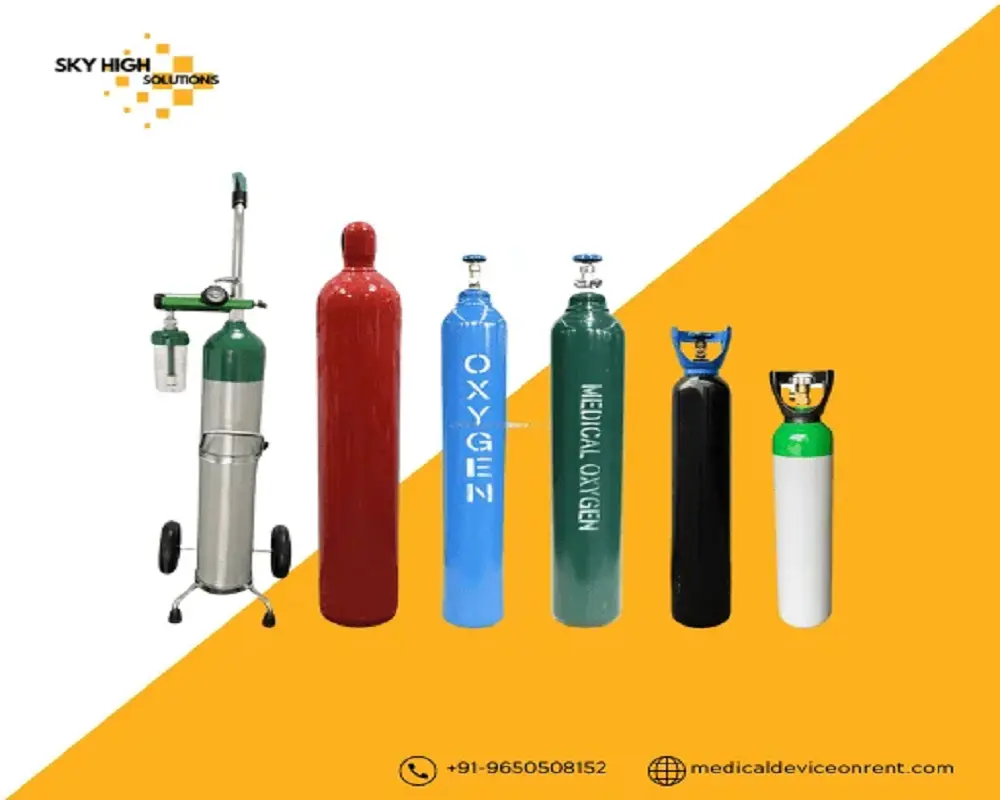
Oxygen cylinders are essential medical devices that provide life-saving oxygen to patients experiencing breathing difficulties. They are widely used in hospitals, ambulances, and home-care settings for emergency and long-term oxygen therapy. Understanding oxygen cylinders, their types, uses, benefits, and especially the parts of an oxygen cylinder and their functions, helps patients and caregivers use them safely and effectively.
At Medical Device on Rent, we offer reliable oxygen cylinders on rent and sale, ensuring uninterrupted oxygen support for patients at home.
View More: Hospital Bed for Rent
What Is an Oxygen Cylinder?
An oxygen cylinder is a strong, pressurized container that stores medical-grade oxygen. It delivers oxygen through a controlled system consisting of multiple components that regulate pressure and flow according to medical requirements. Oxygen cylinders are commonly recommended for patients with respiratory illnesses, post-surgical recovery, elderly care, and emergency medical situations.
Types of Oxygen Cylinders
Different types of oxygen cylinders are available based on size, material, and purpose of use.
1. Portable Oxygen Cylinders
Portable oxygen cylinders are lightweight and easy to carry. They are ideal for patients who need oxygen support while traveling or moving outside the home.
2. Large Oxygen Cylinders
Large oxygen cylinders store a higher volume of oxygen and are best suited for home care and hospital backup. These cylinders are commonly used for patients requiring continuous oxygen therapy.
3. Aluminum Oxygen Cylinders
Aluminum cylinders are lighter, corrosion-resistant, and easy to handle. They are preferred for home use and frequent mobility.
4. Steel Oxygen Cylinders
Steel cylinders are highly durable and capable of handling high pressure. They are commonly used in hospitals, emergency services, and industrial medical applications.
Parts of an Oxygen Cylinder and Their Functions
Understanding the parts of an oxygen cylinder is essential for safe operation and effective oxygen delivery. Below is a clear explanation of oxygen cylinder parts and functions:
1. Cylinder Body
The main container that holds compressed oxygen. It is made of high-strength steel or aluminum to safely store oxygen under high pressure.
2. Cylinder Valve
The valve controls the release of oxygen from the cylinder. It allows oxygen flow to be started or stopped securely.
3. Regulator
One of the most important parts of oxygen cylinder and their functions, the regulator reduces high-pressure oxygen inside the cylinder to a safe level suitable for patient use.
4. Flow Meter
The flow meter controls and displays the oxygen flow rate, usually measured in liters per minute (LPM), ensuring accurate oxygen delivery.
5. Pressure Gauge
This gauge shows how much oxygen remains in the cylinder, helping users plan refills or replacements on time.
6. Humidifier Bottle
The humidifier adds moisture to oxygen before it reaches the patient, preventing dryness in the nose and throat.
7. Oxygen Mask or Nasal Cannula
These are patient interfaces that deliver oxygen comfortably through the nose or mouth.
Knowing the parts of the oxygen cylinder and their functions helps prevent misuse and ensures safe oxygen therapy at home or in hospitals.
Uses of Oxygen Cylinders
Oxygen cylinder are used in various medical and healthcare situations, including:
- Home oxygen therapy for COPD, asthma, and lung diseases
- Post-COVID and pneumonia recovery
- Emergency medical services and ambulances
- Hospitals, ICUs, and surgical procedures
- Elderly care and palliative care
Benefits of Using Oxygen Cylinders
Instant Oxygen Supply
Oxygen cylinder provide immediate oxygen support during emergencies or sudden breathing difficulties.
Reliable Backup Source
They serve as a dependable backup during power cuts or equipment failure.
Flexible and Versatile
Suitable for short-term and long-term oxygen therapy needs.
Easy Availability
Oxygen cylinders can be quickly delivered and installed at home.
Safety Tips for Oxygen Cylinder Use
To ensure safe usage, follow these essential guidelines:
- Keep the cylinder in an upright position
- Do not expose the cylinder to heat or open flames
- Avoid smoking near oxygen equipment
- Use only certified regulators and accessories
- Ensure proper room ventilation
Proper handling of oxygen cylinder parts and functions ensures safe and effective therapy.
Oxygen Cylinder vs Oxygen Concentrator
When comparing Oxygen Cylinder vs Oxygen Concentrator, oxygen cylinders store compressed oxygen, while oxygen concentrators generate oxygen from ambient air. Oxygen cylinders are ideal for emergencies and backup, whereas oxygen concentrators are suitable for continuous long-term oxygen therapy. Many patients use both an oxygen cylinder and an oxygen concentrator to ensure an uninterrupted oxygen supply.
Why Choose Medical Device on Rent?
At Medical Device on Rent, we provide high-quality medical equipment for home care. We thoroughly check our oxygen cylinders for safety and performance before delivery.
We offer:
- Oxygen cylinders on rent and sale
- Fast doorstep delivery
- Affordable rental plans
- Professional customer support
Conclusion
Oxygen cylinders play a crucial role in saving lives and supporting patients with respiratory conditions. Understanding the types, uses, benefits, and especially the parts of an oxygen cylinder and their functions, allows caregivers and patients to use them safely and confidently. For reliable oxygen solutions, trust Medical Device on Rent to meet your home healthcare needs.
Frequently Asked Questions
1. What are the main parts of an oxygen cylinder?
The main parts of an oxygen cylinder include the cylinder body, valve, regulator, flow meter, pressure gauge, humidifier bottle, and oxygen delivery interface such as a mask or nasal cannula. Each part plays an important role in safe oxygen delivery.
2. What are the parts of an oxygen cylinder and their functions?
The parts of an oxygen cylinder and their functions include storing oxygen (cylinder body), controlling oxygen release (valve), reducing pressure (regulator), measuring flow (flow meter), showing oxygen levels (pressure gauge), and adding moisture (humidifier).
3. Why is it important to understand oxygen cylinder parts and functions?
Knowing oxygen cylinder parts and functions helps ensure safe handling, accurate oxygen delivery, and timely refilling. It also reduces the risk of leaks, misuse, and medical emergencies.
4. Which type of oxygen cylinder is best for home use?
Portable and medium-sized oxygen cylinders are commonly preferred for home care. The choice depends on the patient’s oxygen requirement, mobility needs, and duration of therapy.
5. How long does an oxygen cylinder last?
The duration depends on the cylinder size and oxygen flow rate. A higher flow rate will empty the cylinder faster, while lower flow rates allow longer usage.
6. Is an oxygen cylinder safe for home use?
Yes, oxygen cylinders are safe for home use when handled properly. Always keep the cylinder upright, avoid open flames, and use certified regulators and accessories.
Also Read: