
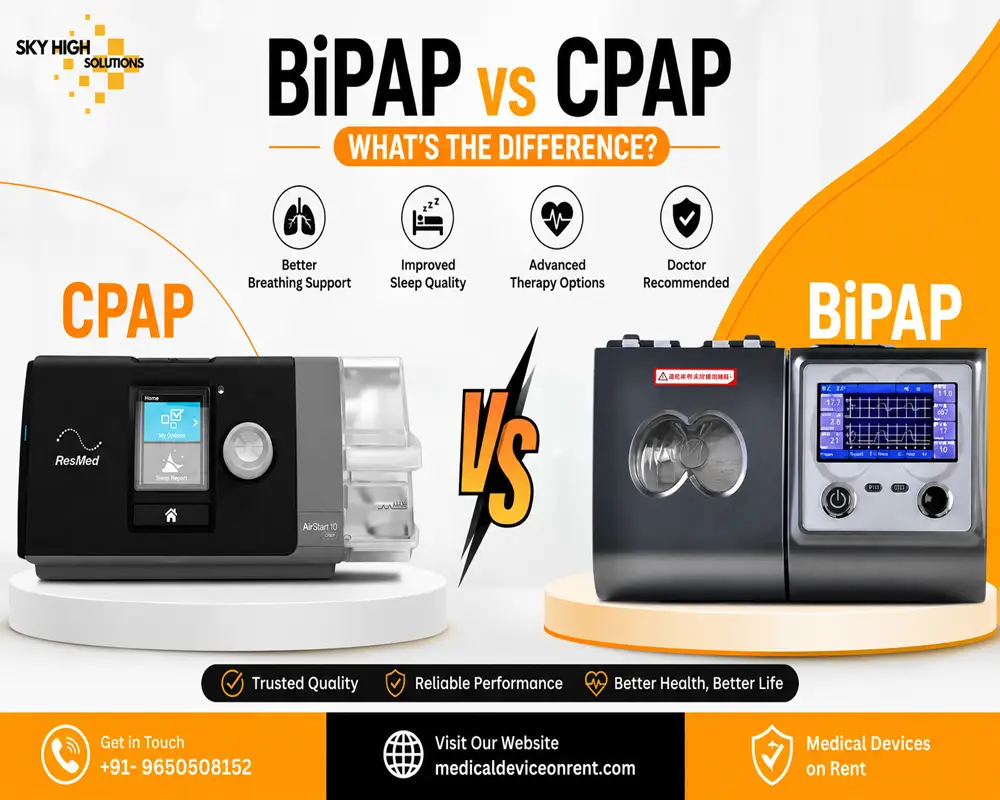
Sleep-related breathing disorders and respiratory conditions can significantly affect a person’s quality of life. Fortunately, modern respiratory support devices such as CPAP and BiPAP machines help patients breathe more comfortably and improve overall health outcomes. However, many people are confused about the BiPAP vs CPAP debate and often wonder which device is right for their condition.
In this guide, we’ll explain the difference between a BiPAP and a CPAP machine, their uses, benefits, and indications to help you understand which therapy may be recommended by healthcare professionals.
What Is a CPAP Machine?
A CPAP (Continuous Positive Airway Pressure) machine delivers a constant and steady stream of air pressure throughout both inhalation and exhalation. The primary purpose of a CPAP machine is to keep the airway open during sleep and prevent breathing interruptions.
CPAP therapy is commonly prescribed for people suffering from obstructive sleep apnea (OSA), a condition where the airway repeatedly collapses during sleep.
Benefits of CPAP Machines
- Maintains a constant airflow
- Prevents airway blockage during sleep
- Reduces snoring
- Improves sleep quality
- Helps decrease daytime fatigue
- Supports better oxygen levels during sleep
What Is a BiPAP Machine?
A BiPAP (Bilevel Positive Airway Pressure) machine provides two different pressure levels:
- Higher pressure during inhalation (IPAP)
- Lower pressure during exhalation (EPAP)
This dual-pressure system makes breathing easier for patients who require additional respiratory support or have difficulty exhaling against continuous pressure.
BiPAP machines are often used for more complex respiratory conditions beyond sleep apnea.
Benefits of BiPAP Machines
- Easier exhalation compared to CPAP
- Greater comfort for patients requiring higher pressure settings
- Supports patients with respiratory muscle weakness
- Improves ventilation and carbon dioxide removal
- Suitable for chronic respiratory disorders
BiPAP vs CPAP: Key Differences
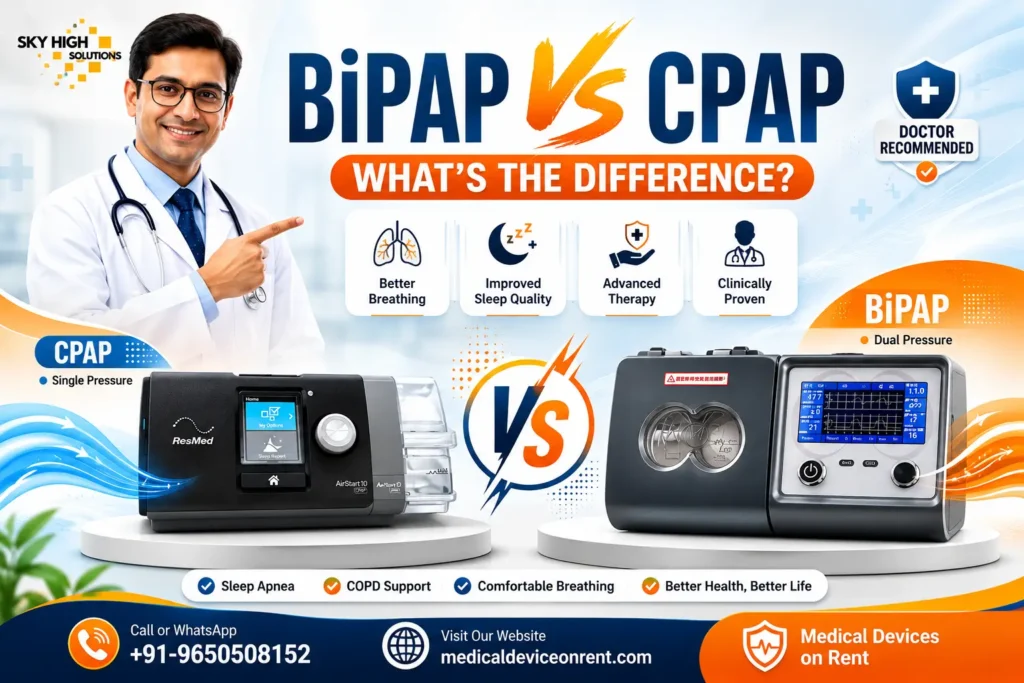
Understanding the BiPAP vs CPAP difference is essential when choosing the appropriate therapy.
| Feature | CPAP Machine | BiPAP Machine |
|---|---|---|
| Air Pressure | Single continuous pressure | Two pressure levels |
| Inhalation Support | Same pressure | Higher pressure |
| Exhalation Support | Same pressure | Lower pressure |
| Comfort Level | Good for mild to moderate sleep apnea | Better for patients needing higher pressures |
| Primary Use | Obstructive Sleep Apnea | Sleep apnea and respiratory disorders |
| Cost | Generally lower | Usually higher |
The main BiPAP vs CPAP machine distinction lies in how air pressure is delivered. CPAP provides one continuous pressure, while BiPAP offers separate inhalation and exhalation pressures.
BiPAP vs CPAP Indications
Healthcare providers choose the device based on the patient’s medical condition and breathing requirements.
Common CPAP Indications
CPAP therapy is often recommended for:
- Obstructive Sleep Apnea (OSA)
- Loud snoring associated with sleep apnea
- Mild to moderate sleep-disordered breathing
- Patients who can tolerate continuous pressure
Common BiPAP Indications
When discussing BiPAP vs CPAP indications, BiPAP is generally preferred for:
- Severe Obstructive Sleep Apnea
- Chronic Obstructive Pulmonary Disease (COPD)
- Obesity Hypoventilation Syndrome
- Neuromuscular disorders
- Central Sleep Apnea
- Respiratory failure
- Patients who cannot tolerate CPAP pressure
Which Machine Is More Comfortable?
Comfort varies from patient to patient. Many individuals adapt well to CPAP therapy. However, patients who require higher pressure settings often find BiPAP therapy more comfortable because the lower pressure during exhalation reduces breathing effort.
For patients experiencing discomfort while exhaling against CPAP pressure, healthcare professionals may recommend switching to a BiPAP machine.
Is BiPAP Better Than CPAP?
The answer depends on the individual’s medical condition.
CPAP is highly effective and remains the first-line treatment for most cases of obstructive sleep apnea. BiPAP is not necessarily better; it is simply designed for patients who need more advanced respiratory support.
A sleep specialist or respiratory physician can determine which therapy is most appropriate based on sleep study results and respiratory assessment.
How to Choose Between BiPAP and CPAP?
Choosing between a CPAP and BiPAP machine should always be based on medical advice. Factors considered include:
- Severity of sleep apnea
- Presence of COPD or other lung diseases
- Oxygen and carbon dioxide levels
- Pressure requirements
- Patient comfort and tolerance
A proper diagnosis ensures the most effective and comfortable treatment plan.
Conclusion
When comparing BiPAP vs CPAP, both devices play a crucial role in respiratory therapy. CPAP machines provide continuous air pressure and are commonly used for obstructive sleep apnea, while BiPAP machines offer two pressure levels that support patients with more complex breathing disorders.
Understanding the BiPAP vs CPAP machine differences and BiPAP vs CPAP indications can help patients make informed decisions about their respiratory care. Always consult a healthcare professional before selecting a device, as the right therapy depends on your specific medical condition.
If you need a CPAP or BiPAP machine without the upfront cost of purchasing one, Medical Device on Rent offers reliable respiratory equipment solutions, helping patients access quality respiratory care conveniently and affordably from the comfort of their homes.