
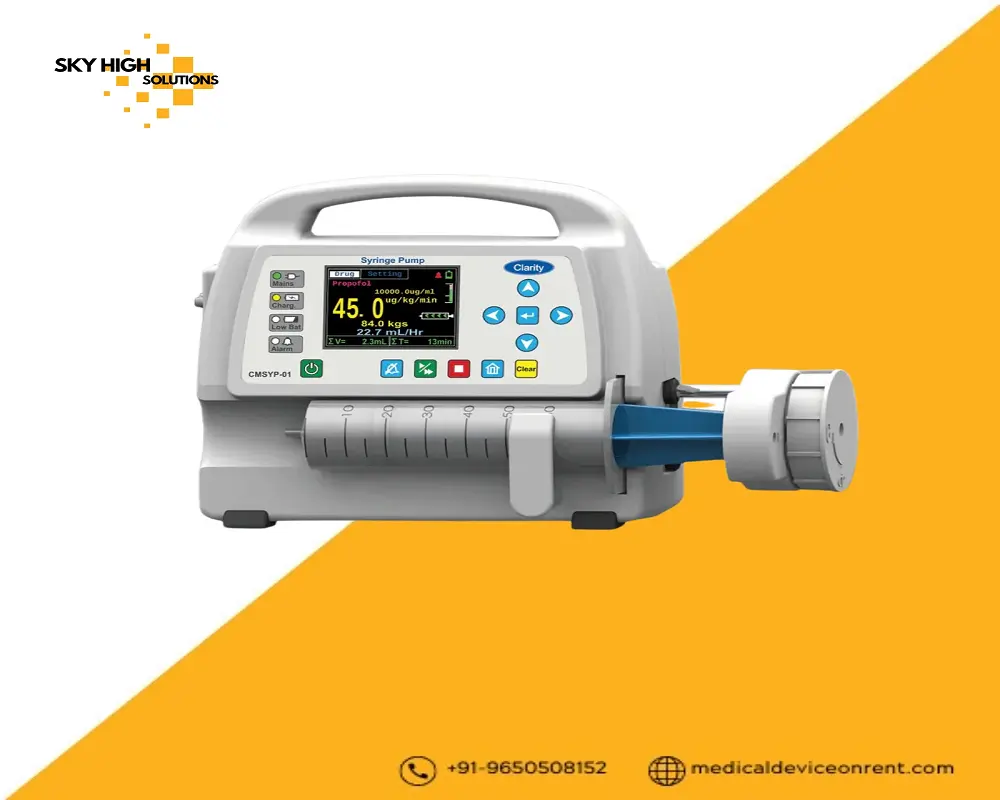
Home healthcare has transformed the way patients receive medical treatment. Many therapies that once required hospital stays can now be safely managed at home with the right equipment and guidance. One such device that plays a critical role in modern home care is the syringe pump.
If you are a caregiver, family member, or patient trying to understand whether a syringe pump is necessary, this guide will walk you through everything in simple, practical terms.
Must Read: Syringe Pump Uses, Types and Benefits
What Is a Syringe Pump?
A syringe pump is a medical device designed to deliver very precise amounts of medication or fluids into a patient’s body over a controlled period of time. Unlike manual injections, which deliver medication instantly, a syringe pump ensures steady, accurate, and continuous drug delivery.
The device works by slowly pushing the plunger of a loaded syringe at a programmed rate. This level of precision is especially important when dealing with medications that must be administered carefully.
Why Would Someone Need a Syringe Pump at Home?
Not every patient requires a syringe pump. These devices are typically used when:
- Medication must be delivered continuously or at exact intervals
- Even slight dosage errors could cause complications
- Manual injections would be impractical or uncomfortable
- The patient requires long-term therapy outside a hospital
In home care settings, syringe pumps are most often recommended by doctors for patients with specific medical conditions.
Also Read: Common Syringe Pump Problems and How to Fix Them
Common Situations Where Syringe Pumps Are Needed at Home
Let’s explore the real-world scenarios where syringe pumps become essential.
1️⃣ Patients Requiring Continuous Medication Delivery
Some treatments demand a constant flow of medication rather than occasional doses. For example:
- Pain management therapies
- Sedation support
- Certain neurological treatments
- Hormone therapies
A syringe pump allows medication to be delivered slowly and consistently, maintaining stable drug levels in the body.
Why this matters: Sudden medication fluctuations can reduce effectiveness or trigger side effects.
2️⃣ Cancer Patients Undergoing Palliative Care
Many cancer patients receiving palliative or supportive care at home use syringe pumps for:
- Pain relief medication
- Anti-nausea drugs
- Sedatives
- Symptom management therapies
These medications often need careful dosing to maintain comfort without overmedication.
Why syringe pumps help: They minimize repeated injections and provide smoother symptom control.
3️⃣ Patients with Severe Pain Management Needs
Chronic or post-surgical pain may require:
- Opioid medications
- Controlled analgesics
- Specialized pain relief drugs
Manual dosing can lead to peaks and troughs in pain relief. Syringe pumps maintain a steady therapeutic effect.
4️⃣ Patients Receiving Intravenous (IV) Drugs at Home
Certain treatments delivered via IV may require:
- Antibiotics
- Antiviral drugs
- Chemotherapy agents (in selected cases)
- Cardiac medications
Accuracy becomes critical because IV medications act quickly in the body.
5️⃣ Pediatric Patients Requiring Precise Dosages
Children are particularly sensitive to medication errors. Even tiny variations in dosage can have significant effects.
Syringe pumps are commonly used for pediatric patients needing:
- Controlled infusions
- Nutritional support drugs
- Specialized therapies
Key advantage: High precision suitable for low-volume medication delivery.
6️⃣ Patients with Neurological Conditions
Conditions such as:
- Parkinson’s disease
- Epilepsy (certain therapies)
- Severe spasticity
- Advanced neurological disorders
may require tightly controlled medication administration.
7️⃣ Post-Surgical Patients Needing Controlled Drug Infusion
After major surgeries, doctors may prescribe controlled medication delivery for:
- Pain control
- Muscle relaxants
- Sedatives
- Antibiotics
A syringe pump ensures medication is delivered exactly as prescribed.
Why Not Just Use Regular Injections?
This is one of the most common caregiver questions.
While manual injections are suitable for many treatments, they may not work well when:
❌ Medication must be delivered over hours or days
❌ Frequent injections would cause discomfort
❌ Precise micro-dosing is required
❌ Dosage timing is critical
A syringe pump eliminates these challenges.
Who Typically Recommends a Syringe Pump?
Syringe pumps are never self-prescribed devices. They are usually recommended by:
✅ Doctors
✅ Oncologists
✅ Critical care specialists
✅ Pain management experts
✅ Home healthcare providers
Always follow professional medical advice before using such equipment.
Benefits of Using a Syringe Pump at Home
When medically appropriate, syringe pumps offer several advantages.
1. High Precision & Accuracy
Syringe pumps deliver medication at exact programmed rates, reducing dosing errors.
2. Continuous & Stable Therapy
They prevent sudden spikes or drops in drug levels, improving treatment effectiveness.
3. Reduced Patient Discomfort
Fewer manual injections mean less stress and pain for the patient.
4. Better Caregiver Convenience
Caregivers don’t need to administer injections every few minutes or hours.
5. Suitable for Long-Term Use
Ideal for patients requiring extended medication delivery at home.
Safety Considerations for Home Use
Although syringe pumps are extremely helpful, safety remains essential.
Proper Training Is Crucial
Caregivers should receive clear instructions on:
- Loading syringes
- Setting infusion rates
- Recognizing alarms
- Troubleshooting basic issues
Always Follow Prescribed Settings
Never alter dosage rates without medical guidance.
Monitor the Patient Regularly
Even automated systems require human observation.
Watch for:
- Unusual symptoms
- Device alerts
- IV site issues (if applicable)
Maintain Hygiene & Cleanliness
Sterility and proper handling reduce infection risks.
Check Battery & Power Status
Unexpected interruptions may affect therapy delivery.
Who May NOT Need a Syringe Pump at Home?
Not all patients benefit from syringe pumps.
Typically unnecessary for:
❌ Simple oral medications
❌ Occasional injections
❌ Short-term treatments without precision needs
❌ Self-managed therapies
A doctor’s evaluation determines suitability.
Syringe Pump vs Infusion Pump – Are They the Same?
Many people confuse these devices.
Syringe Pump
✅ Uses syringes
✅ Best for small, precise volumes
✅ Ideal for potent medications
Infusion Pump
✅ Uses fluid bags
✅ Designed for larger volumes
✅ Common for hydration, nutrition, etc.
Both have different applications.
Common Caregiver Concerns
“Is a syringe pump safe at home?”
Yes — when prescribed, correctly set up, and monitored. Modern pumps include alarms and safety features.
“Can patients move around with it?”
Most syringe pumps are compact and portable, but mobility depends on the therapy type and IV setup.
“What if the device stops?”
Most pumps provide alerts for:
- Occlusions
- Low battery
- Empty syringes
- System errors
Caregivers should know basic response steps.
Practical Signs That a Syringe Pump May Be Needed
While only a doctor can decide, families often encounter situations like:
✅ Repeated injections causing discomfort
✅ Medication timing becoming difficult
✅ Complex drug regimens
✅ Continuous therapy needs
✅ Home ICU or advanced care setups
These scenarios often lead to syringe pump recommendations.
Importance of Professional Guidance
A syringe pump is a medical device requiring clinical oversight. Proper use involves:
- Prescription-based medication planning
- Correct rate programming
- Monitoring protocols
- Regular assessments
Avoid self-experimentation.
Final Thoughts
A syringe pump is not just a convenience device — it is a critical precision tool used when medication accuracy directly impacts patient safety and treatment outcomes.
Patients who typically need syringe pumps at home include:
✅ Cancer & palliative care patients
✅ Severe pain management cases
✅ Pediatric patients
✅ Neurological therapy patients
✅ Post-surgical recovery cases
✅ Long-term IV medication patients
When prescribed and managed properly, syringe pumps greatly enhance the quality, safety, and comfort of home healthcare. If you are exploring syringe pump rental or home medical equipment, choosing reliable, well-maintained devices with proper support is extremely important for patient safety and peace of mind.
Must Read: How to Use a DVT Pump Safely at Home
FAQs
Q1. Is a syringe pump safe for home use?
Yes, a syringe pump is generally safe for home use when prescribed by a doctor and used correctly. Modern syringe pumps include safety alarms, dose control mechanisms, and error alerts. However, caregivers must follow medical instructions carefully and never change infusion settings without professional guidance.
Q2. Which patients typically need a syringe pump at home?
Syringe pumps are commonly recommended for patients requiring precise, continuous medication delivery. This may include cancer patients in palliative care, individuals with severe pain management needs, pediatric patients, neurological cases, and patients receiving long-term IV medications at home.
Q3. What is the difference between a syringe pump and an infusion pump?
A syringe pump uses a syringe to deliver small, highly accurate volumes of medication, making it ideal for potent drugs. An infusion pump usually works with fluid bags and is designed for larger volume delivery, such as hydration or nutrition. Both devices serve different clinical purposes.
Q4. Can I rent a syringe pump instead of buying one?
Yes, many families prefer renting a syringe pump because it is cost-effective for short-term or temporary treatments. Renting also eliminates maintenance concerns and allows access to professionally serviced devices. Always choose a trusted medical equipment provider.
Q5. When do doctors recommend a syringe pump for home care?
Doctors typically recommend syringe pumps when medication needs to be delivered slowly, continuously, and with extreme precision. This is common in pain therapy, symptom management, ICU-level home care, and treatments where manual dosing may cause risks.
Q6. Do syringe pumps require constant monitoring?
While syringe pumps automate drug delivery, basic patient monitoring is still important. Caregivers should periodically check the device, observe patient comfort, and respond to any alarms or alerts.