
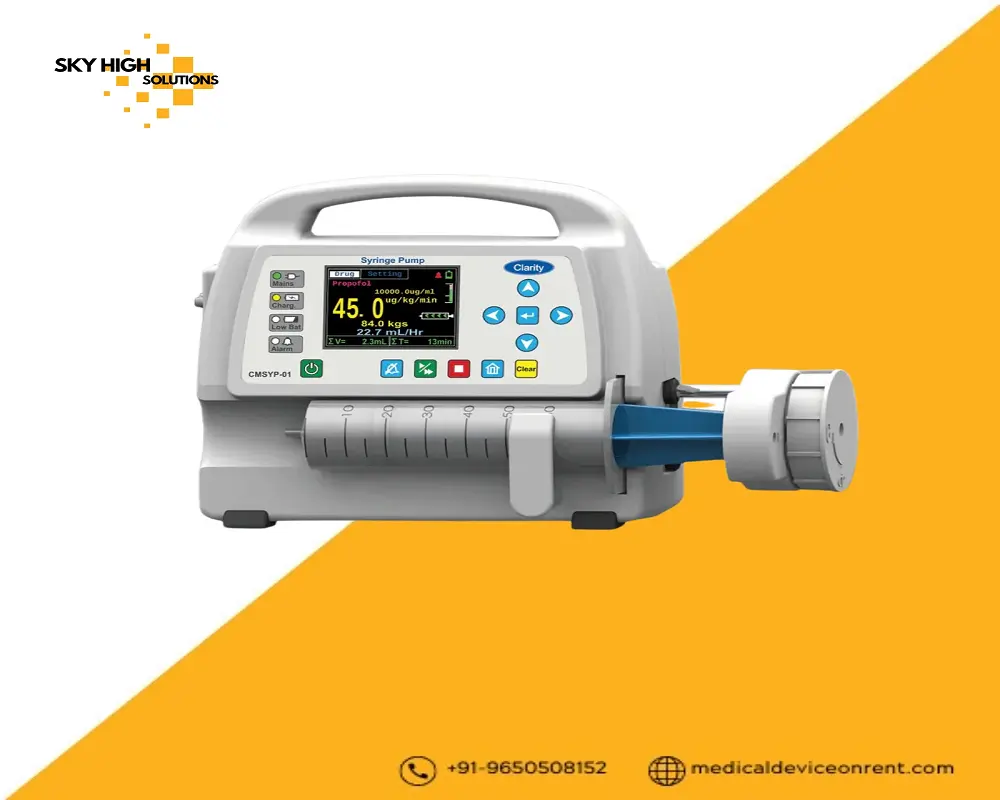
In modern medical care, precision and safety are non‑negotiable. Many treatments require medications or fluids to be delivered in very small, accurate doses over a fixed period of time. This is where a syringe pump plays a crucial role. From intensive care units to home healthcare settings, syringe pumps are trusted medical devices that ensure controlled and reliable drug delivery.
This detailed guide explains what a syringe pump is, how it works, its uses, types, benefits, safety features, and why renting a syringe pump can be a cost‑effective solution, especially in cities like Gurgaon and Delhi NCR.
What Is a Syringe Pump?
A syringe pump is a medical infusion device designed to deliver precise amounts of medication or fluids from a syringe into a patient’s body at a programmed rate. Unlike gravity‑based IV systems, syringe pumps use automated mechanisms to ensure consistent flow, minimizing human error.
Syringe pumps are commonly used when medications must be administered in very small volumes, such as painkillers, insulin, chemotherapy drugs, sedatives, or neonatal medications.
How Does a Syringe Pump Work?
A syringe pump securely holds a syringe filled with medication. The healthcare professional programs the device with parameters such as:
- Flow rate (ml/hour)
- Total volume to be infused
- Duration of infusion
Once activated, the pump’s motor gently pushes the syringe plunger at a controlled speed, ensuring accurate and continuous drug delivery. Advanced models also include alarms and safety sensors to detect problems like blockages or empty syringes.
Common Uses of Syringe Pumps
Syringe pumps are used across multiple medical departments due to their accuracy and reliability.
1. Intensive Care Units (ICU)
In ICUs, patients often require potent drugs such as sedatives, vasopressors, or analgesics. Syringe pumps ensure precise dosing, which is critical for unstable or critically ill patients.
2. Neonatal and Pediatric Care
Newborns and infants are extremely sensitive to medication dosages. Syringe pumps allow micro‑infusions, making them ideal for neonatal intensive care units (NICU).
3. Anesthesia and Pain Management
During surgeries or post‑operative care, syringe pumps are used to administer anesthesia, epidurals, or pain relief medications in a controlled manner.
4. Chemotherapy and Oncology
Chemotherapy drugs require strict dosage control to minimize side effects while ensuring effectiveness. Syringe pumps provide steady and accurate drug delivery during treatment.
5. Home Healthcare
Patients receiving long‑term therapy at home, such as palliative care or chronic pain management, often use syringe pumps under medical supervision.
Types of Syringe Pumps
Different types of syringe pumps are available based on clinical requirements and settings.
1. Single‑Channel Syringe Pump
This type delivers medication from one syringe at a time. It is commonly used in general wards and home care settings.
2. Multi‑Channel Syringe Pump
Multi‑channel pumps can deliver multiple medications simultaneously. These are mainly used in ICUs where patients need several drugs at once.
3. Programmable Syringe Pump
These advanced pumps allow detailed programming of flow rates, time intervals, and dosing limits, ensuring maximum control and safety.
4. Portable Syringe Pump
Compact and lightweight, portable syringe pumps are ideal for patient transport and home care. They often run on rechargeable batteries.
Key Benefits of Using a Syringe Pump
Syringe pumps offer several advantages over traditional infusion methods.
1. High Accuracy and Precision
They deliver exact medication doses, which is essential for drugs with narrow therapeutic ranges.
2. Enhanced Patient Safety
Built‑in alarms alert caregivers to issues such as occlusion, air bubbles, low battery, or completion of infusion.
3. Consistent Drug Delivery
Unlike manual methods, syringe pumps maintain a constant flow rate without fluctuations.
4. Reduced Workload for Medical Staff
Once programmed, the pump operates automatically, allowing healthcare professionals to focus on patient monitoring.
5. Suitable for Critical and Sensitive Treatments
They are ideal for neonates, ICU patients, and those requiring long‑term medication therapy.
Safety Features in Modern Syringe Pumps
Modern syringe pumps are equipped with advanced safety mechanisms, including:
- Occlusion detection alarms
- Air‑in‑line sensors
- Low battery alerts
- Syringe size recognition
- Anti‑free‑flow protection
These features significantly reduce the risk of medication errors and improve overall treatment safety.
Syringe Pump vs Infusion Pump
The comparison of Syringe Pump vs Infusion Pump is common because both devices are used for controlled medication delivery in medical settings. However, they serve different clinical purposes based on volume, accuracy, and type of medication administered. Understanding the difference between a syringe pump and an infusion pump helps doctors and caregivers choose the right device for safe and effective treatment.
| Feature | Syringe Pump | Infusion Pump |
|---|---|---|
| Volume | Small volumes | Large volumes |
| Accuracy | Very high | High |
| Typical Use | ICU, NICU, anesthesia | IV fluids, antibiotics |
| Medication Type | Potent drugs | IV fluids |
Both devices are essential, but syringe pumps are preferred when precision is critical.
Why Rent a Syringe Pump?
Purchasing medical equipment may not always be practical, especially for short‑term or home use. Renting a syringe pump offers several benefits.
1. Cost‑Effective
Rental eliminates the high upfront cost of buying a new device.
2. Ideal for Short‑Term Use
Perfect for post‑surgery recovery, temporary treatments, or trial periods.
3. Maintenance and Support Included
Rental providers usually handle servicing, calibration, and technical support.
4. Access to Latest Models
You get well‑maintained, updated equipment without worrying about depreciation.
Syringe Pump on Rent in Gurgaon & Delhi NCR
For patients and healthcare providers in Gurgaon and Delhi NCR, renting a syringe pump is a convenient and reliable option. Medical Device on Rent offers high‑quality syringe pumps on rent, suitable for hospital and home care use.
With prompt delivery, professional guidance, and affordable rental plans, Medical Device on Rent ensures patients receive accurate treatment without the burden of high equipment costs.
Frequently Asked Questions
Is a syringe pump safe for home use?
Yes, when used under medical guidance, syringe pumps are safe for home healthcare and long‑term treatments.
How accurate is a syringe pump?
Syringe pumps are highly accurate and designed to deliver precise medication doses, even in very small volumes.
What medications can be given using a syringe pump?
Medications such as insulin, painkillers, sedatives, chemotherapy drugs, and neonatal medicines are commonly administered.
Can I rent a syringe pump for short durations?
Yes, syringe pumps can be rented for short‑term or long‑term needs depending on the treatment plan.
Conclusion
A syringe pump is an essential medical device that ensures safe, accurate, and controlled medication delivery. Its role in critical care, neonatal treatment, anesthesia, and home healthcare makes it indispensable in modern medicine.
If you are looking for a syringe pump on rent in Gurgaon or Delhi NCR, Medical Device on Rent provides reliable equipment, expert support, and flexible rental plans to meet your healthcare needs with confidence and peace of mind.