
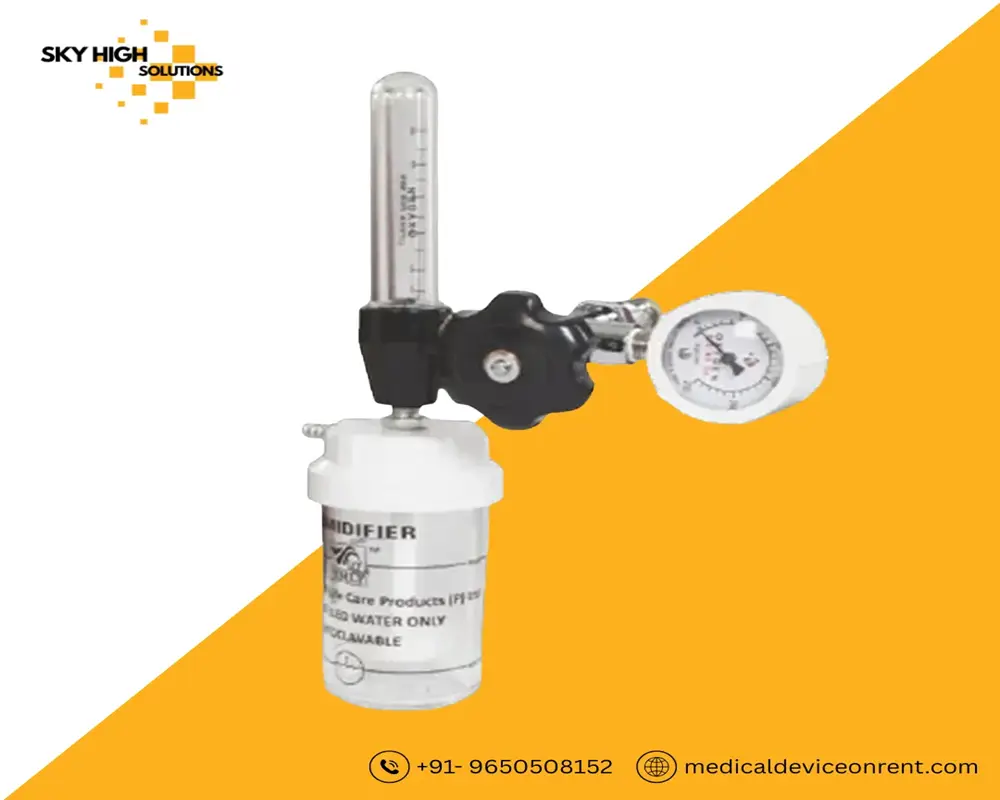
In modern healthcare, maintaining proper oxygen levels in patients is essential for survival and recovery. One of the most crucial devices used for this purpose is the Oxygen Flowmeter. Whether in hospitals, clinics, or home care settings, this small yet powerful device ensures accurate oxygen delivery to patients who need respiratory support.
If you are using an oxygen cylinder at home or in a medical facility, understanding the role of a flowmeter for oxygen cylinder is extremely important. In this detailed guide, we will explore its uses, benefits, working mechanism, and also explain how to connect oxygen cylinder with flow meter properly.
What is an Oxygen Flowmeter?
An Oxygen Flowmeter is a medical device designed to regulate and measure the flow of oxygen from an oxygen source, such as a cylinder or central oxygen supply, to a patient. It ensures that the patient receives oxygen at the correct flow rate as prescribed by a doctor.
The oxygen cylinder flow meter is usually attached to the oxygen cylinder valve and comes with a transparent tube, a flow control knob, and measurement markings (in liters per minute or LPM). This allows caregivers and medical professionals to monitor and adjust oxygen flow precisely.
Uses of Oxygen Flowmeter in Medical Care
The flowmeter for oxygen cylinder plays a vital role in various healthcare scenarios. Below are some of the most common uses:
1. Oxygen Therapy
Patients suffering from respiratory conditions such as asthma, COPD, pneumonia, or viral infections often require oxygen therapy. The flowmeter ensures a steady and controlled oxygen supply.
2. Emergency Care
In emergency situations like cardiac arrest, trauma, or breathing failure, oxygen flowmeters are used to deliver immediate oxygen support.
3. Surgical Procedures
During surgeries, patients are often given oxygen through anesthesia machines, and flowmeters help regulate the required oxygen levels.
4. Home Healthcare
Many patients prefer home treatment, especially those with chronic respiratory issues. An oxygen cylinder flow meter allows safe and effective oxygen therapy at home.
5. ICU and Critical Care
In intensive care units, precise oxygen delivery is critical. Flowmeters help maintain accurate oxygen levels for critically ill patients.
Benefits of Using an Oxygen Flowmeter
Using an Oxygen Flowmeter offers several advantages, making it an essential medical device:
1. Accurate Oxygen Delivery
The device ensures that patients receive the exact amount of oxygen required, preventing both under-delivery and over-delivery.
2. Easy Monitoring
The transparent tube with measurement markings makes it easy to monitor oxygen flow in real time.
3. User-Friendly Design
Most flowmeter for oxygen cylinder devices are simple to operate, even for home users with minimal training.
4. Portable and Lightweight
These devices are compact and can be easily attached to portable oxygen cylinders, making them ideal for home and travel use.
5. Cost-Effective
Compared to complex oxygen delivery systems, an oxygen cylinder flow meter is affordable and highly efficient.
How Does an Oxygen Flowmeter Work?
Understanding how an Oxygen Flowmeter works helps in its proper usage and maintenance.
The device operates on a simple principle:
- Oxygen from the cylinder enters the flowmeter through an inlet
- The flow control knob adjusts the amount of oxygen passing through
- Inside the transparent tube, a floating ball (or bobbin) rises depending on the oxygen flow rate
- The position of the ball indicates the oxygen flow in liters per minute (LPM)
- The oxygen then travels through tubing to a mask or nasal cannula for patient use
This mechanism ensures precise control over oxygen delivery, making the flowmeter for oxygen cylinder reliable and efficient.
How to Connect Oxygen Cylinder with Flow Meter
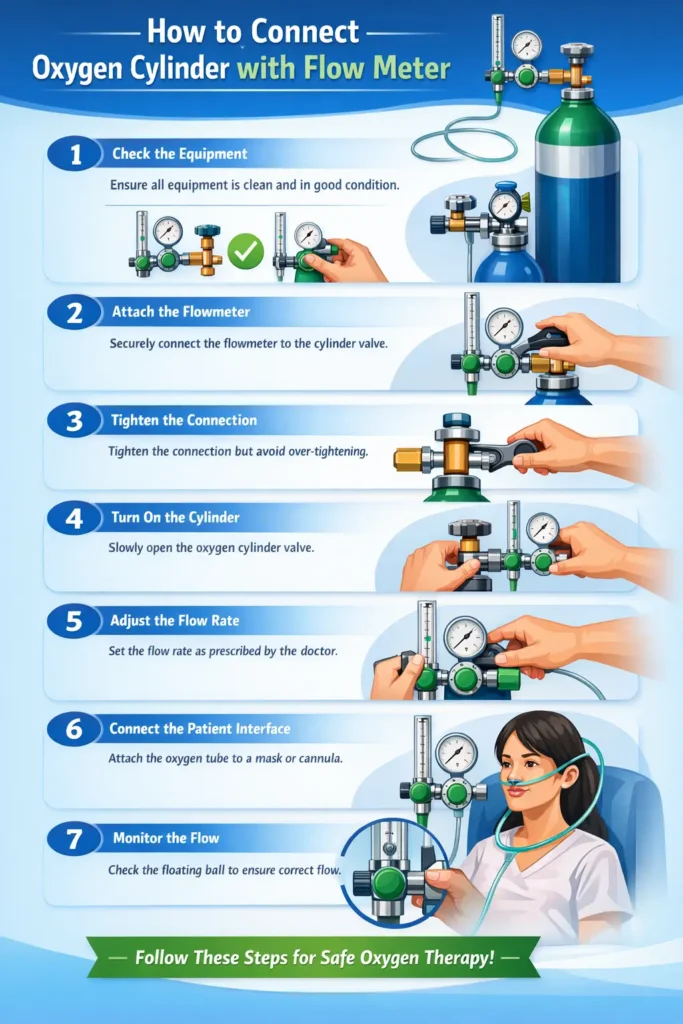
Knowing how to connect oxygen cylinder with flow meter is essential for safe usage. Follow these simple steps:
Step 1: Check the Equipment
Ensure that the oxygen cylinder, regulator, and oxygen cylinder flow meter are clean and in good condition.
Step 2: Attach the Flowmeter
Connect the flowmeter securely to the oxygen cylinder valve or regulator. Make sure it is tightly fitted to avoid leakage.
Step 3: Tighten the Connection
Use appropriate tools if required, but avoid over-tightening to prevent damage.
Step 4: Turn On the Cylinder
Slowly open the oxygen cylinder valve. You should hear a slight hiss as oxygen starts flowing.
Step 5: Adjust the Flow Rate
Turn the control knob on the Oxygen Flowmeter to set the desired flow rate as prescribed by the doctor.
Step 6: Connect the Patient Interface
Attach the oxygen tubing to a mask or nasal cannula and place it on the patient.
Step 7: Monitor the Flow
Check the floating ball in the flowmeter to ensure the correct oxygen flow level.
Types of Oxygen Flowmeters
There are different types of flowmeter for oxygen cylinder available, depending on usage and requirements:
1. Thorpe Tube Flowmeter
This is the most commonly used type, featuring a vertical transparent tube with a floating ball indicator.
2. Digital Flowmeter
Advanced devices that display oxygen flow electronically for higher accuracy.
3. Integrated Regulator Flowmeter
These combine a pressure regulator and flowmeter into one unit for convenience.
Safety Tips While Using Oxygen Flowmeter
While using an oxygen cylinder flow meter, safety should always be a priority:
- Always keep the oxygen cylinder upright and secured
- Avoid using oil or grease near oxygen equipment
- Keep the device away from fire or heat sources
- Regularly check for leaks in connections
- Follow the prescribed oxygen flow rate only
Maintenance and Care
Proper maintenance ensures the longevity and accuracy of your Oxygen Flowmeter:
- Clean the flowmeter regularly
- Inspect for cracks or damage
- Replace worn-out parts immediately
- Store in a dry and safe place
- Get periodic servicing if used frequently
Who Needs an Oxygen Flowmeter?
An oxygen cylinder flow meter is essential for:
- Patients with chronic lung diseases
- Elderly individuals with breathing issues
- Post-surgery patients
- Emergency medical responders
- Hospitals and home care providers
Conclusion
The Oxygen Flowmeter is a vital medical device that ensures accurate and safe oxygen delivery in various healthcare settings. From hospitals to home care, the flowmeter for oxygen cylinder plays a crucial role in supporting patients with respiratory needs. Understanding its uses, benefits, and working mechanism helps in using the device effectively and safely.
If you are planning to use oxygen therapy at home, it is important to choose a high-quality oxygen cylinder flow meter and learn how to connect oxygen cylinder with flow meter correctly to avoid any complications. For those looking for affordable and convenient solutions, Medical Device on Rent offers reliable and high-quality medical equipment, including oxygen cylinders and flowmeters, making it easier to access essential healthcare devices without a heavy investment.
Read Also Blogs:
Oxygen Cylinder on Rent in Jhajjar
Oxygen Cylinder on Rent in Faridabad
Oxygen Cylinders: Types, Uses, Benefits, and Parts Explained